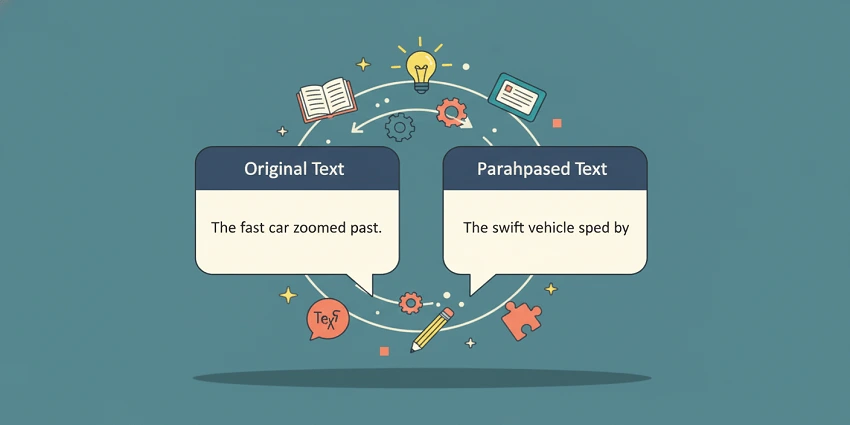


Paraphrasing means rewriting someone else's sentence or idea using your own words. That is the simple definition. But there is more to it than that. You might be surprised by how easy it is for bad paraphrasing to turn into plagiarism.
As a student, you need to use source material in your papers. But if you do not paraphrase correctly, you could be accused of plagiarism, even if you did not mean to copy. The best way to avoid this is to learn what good paraphrasing really is and how to do it right every time.
What is paraphrasing, and why does it matter?
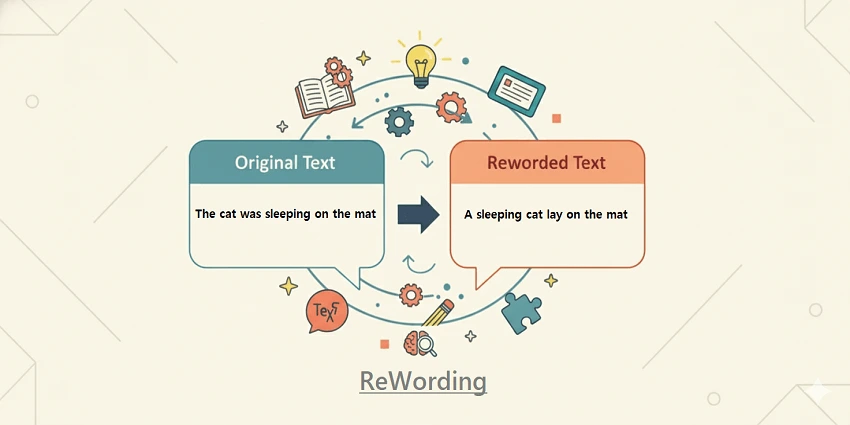
As we mentioned, paraphrasing is when you explain another author's idea using your own words. But it is more than that. To paraphrase well, you need to understand the source material completely. This lets you rebuild the idea from the ground up, not just swap out words for synonyms. It is a key skill that shows you truly get the topic while adding research to your work. If you want to start with the basics first, read our full explanation of what rewording means.
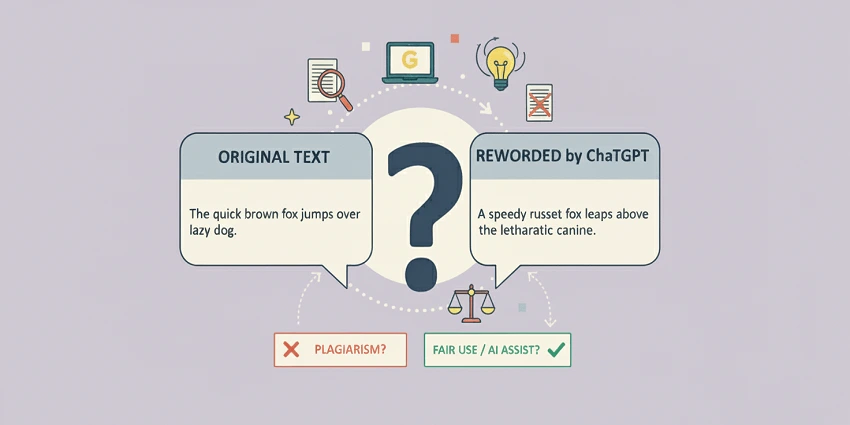
There are several important reasons to paraphrase correctly. First, it helps you avoid plagiarism. Copying a source's sentence structure and words too closely is academically dishonest, even if you include a citation.
Second, paraphrasing helps you learn better. When you can rewrite a complex idea in your own way, you prove to yourself and your teacher that you really understand it. An essay full of direct quotes does not show your understanding. A well-paraphrased argument does.
Finally, it helps you keep your own writing voice. Using too many quotes can make your writing feel choppy. Good paraphrasing lets you blend evidence smoothly into your story, keeping your tone and style consistent.
3 Steps to good paraphrasing
Doing paraphrasing right is a process. Follow these three steps to make sure you are on track:
1. Read and understand
Read the original text carefully until you are sure you know what it means. Do not just skim it for important words.
2. Rewrite from memory
Put the original source away. Now, write the idea down from your memory. Use your own sentence structure and word choices. This is the most important step to avoid copying the original.
3. Check and add your citation
Look at your version next to the original text. Make sure you kept the correct meaning and did not copy the sentence structure. Then, add your citation to credit the source.
Examples of good and bad paraphrasing
Let us look at an example to see the difference.
Original Sentence
Bad Paraphrase
This is plagiarism. Even though a few words are different, the sentence structure is the same, and it uses the source's phrasing too closely.
Good Paraphrase
This is correct. The sentence structure is completely new, the main ideas are explained with different words, and the original meaning is kept. You would add a citation after this sentence.
How to avoid accidental plagiarism
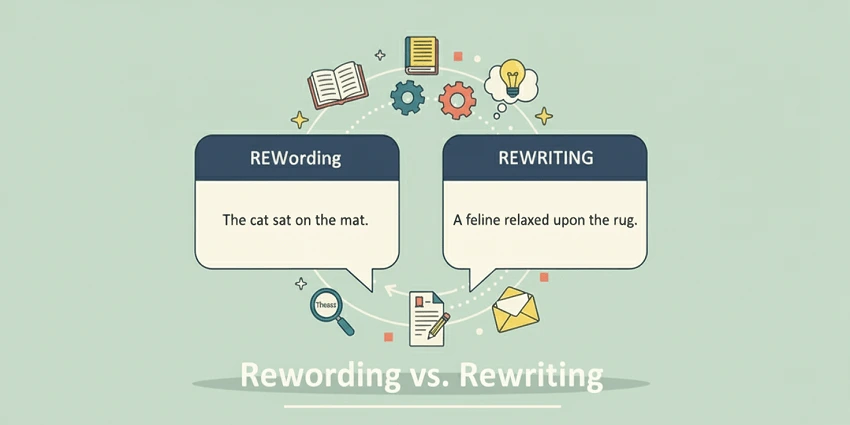
Accidental plagiarism often happens during paraphrasing. You can avoid it by being careful with your method. Always change the sentence structure, not just the words. Remember, you still have to cite the source of the idea, even when you use your own words. It also helps to understand the deeper difference between rewording and rewriting before you paraphrase academic work.
You can also use an online plagiarism checker to review your work before you turn it in. Learning how to paraphrase well is one of the most useful writing skills you will ever learn for school and your future career.
Frequently Asked Questions
Write confidently in your own words
No matter what you are writing, it can be easy to rely too much on your sources. We can help. Before you turn in your work, use our reworder tool to make sure your paraphrasing is both effective and correct.