

As students, we have been through this so many times when teachers explained something and then they asked us to express it in our words. You know the feeling, right? Some students get confused because they don’t have the necessary vocabulary that allows them to express themselves in their own words, sometimes because of confusion, they get lost and therefor out of the topic. In today’s article, I’ll explain and teach you how to use the technique of ‘Rewording’. Let’s get started with the definition.
Definition
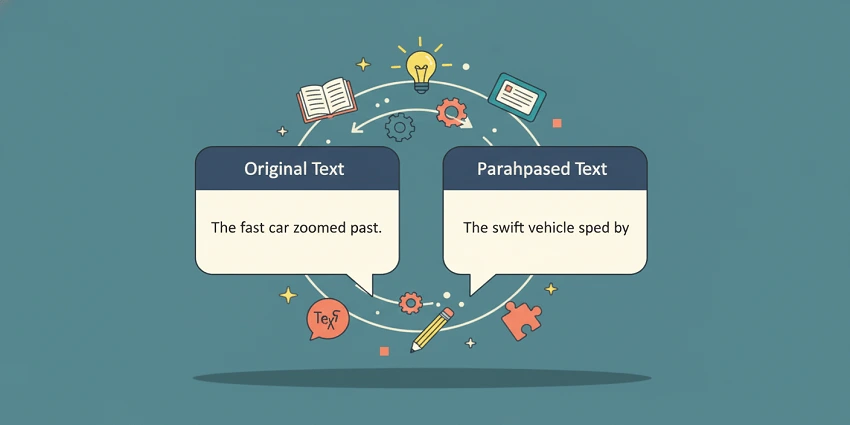
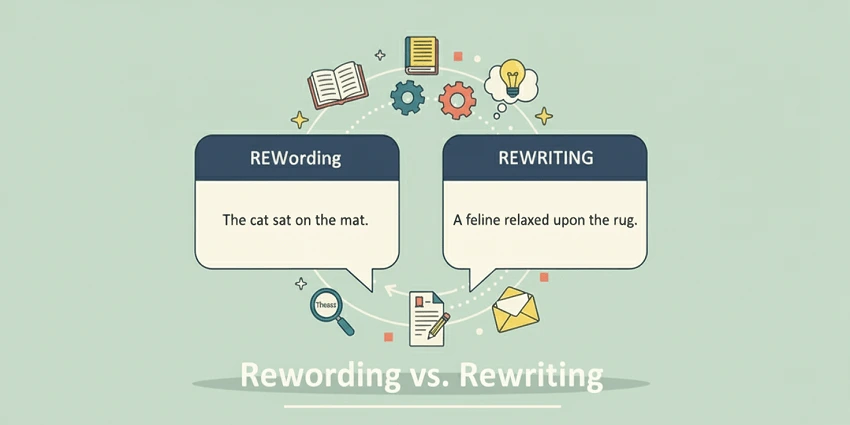
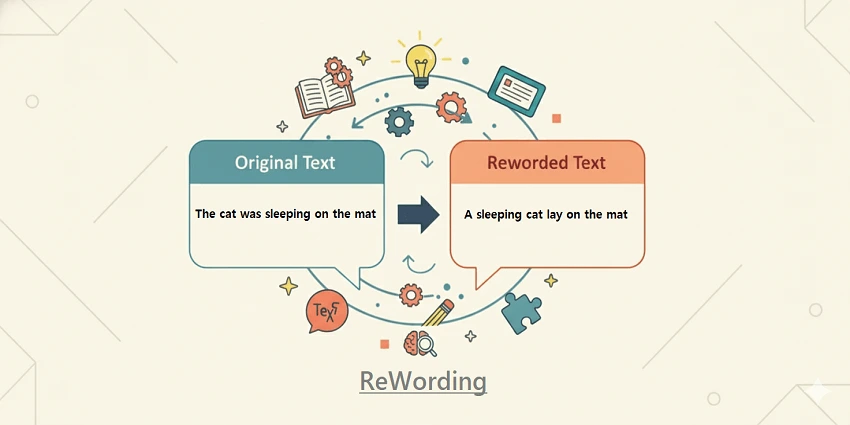
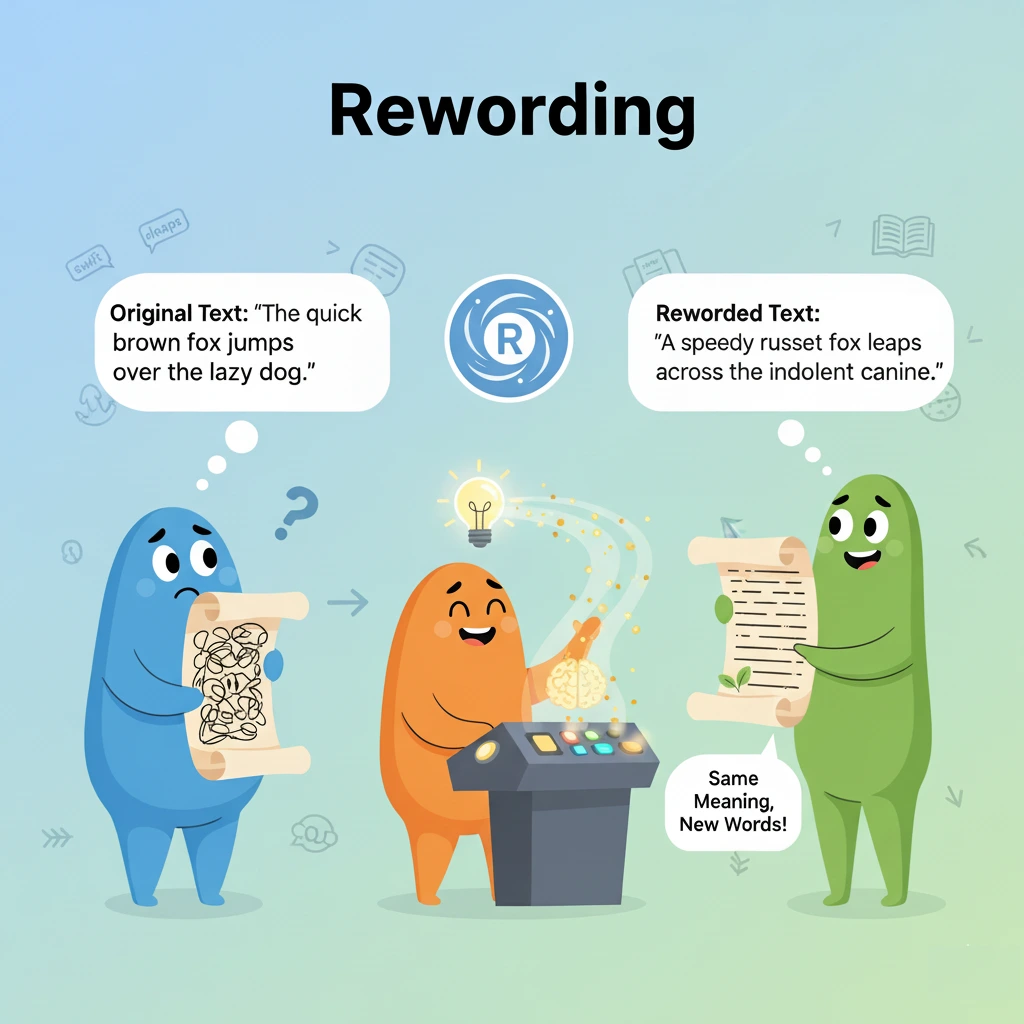
Rewording means you take someone’s text and rewrite in your words without changing the meaning and the last is very important, here is why. You can tweak the text as you want; change words and structure but never change the meaning. Sometimes people refer to rewording as paraphrasing or sentence restructuring. If you want to see the distinction more clearly, read our guide on rewording vs. rewriting.
Think of it like LEGO game, Rewording is like taking apart an old LEGO creation and using those same bricks to build something entirely new. Different look, same pieces.
Why Rewording is Important
Rewording is important because it shows you truly understood what you read.
Imagine this! You read an amazing novel, story or a book and you are so excited to share it with a friend. Would you recite it word for word? Absolutely not, that would be dull! Instead, you would explain it in your unique words.
In schools, this skill is so powerful and helpful all the time because it makes you a stronger writer or speaker by teaching you to explain the same thing differently.
How Does it work? A quick Example
Let’s take this sentence as an example, "The small, curious dog quickly chased the colorful ball across the garden."
Here is how it should be reworded:
See what happened? The core meaning stayed the same, a dog chasing a ball on grass but the words and sentence structure changed completely.
How is Rewording Different from Paraphrasing?
Paraphrasing involves fully understanding someone's ideas and then expressing them in a completely new form. It's more like creating a summary in your own words. If you're curious about the distinction between quoting and paraphrasing, that's worth exploring too.
You can learn more about paraphrasing techniques in our step-by-step paraphrasing guide.
Can I use Tools for Rewording?
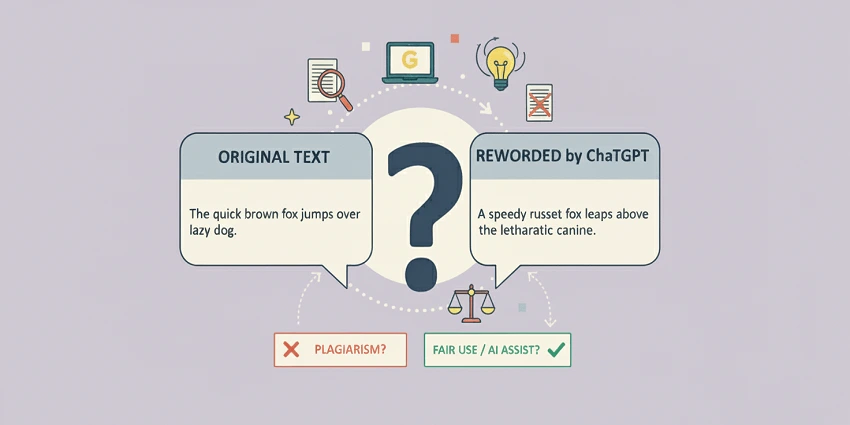
There is always a tool to do something, however choosing the right one is crucial! AI rewording tools exist and can be helpful. But be careful! These tools sometimes make mistakes, changing your meaning or using awkward phrasing. Teachers can spot immediately when you've relied on a tool instead of doing the thinking yourself. Always cite the source and put your personal touch on the final wording. If you are working with AI in school, you should also understand when ChatGPT rewording can count as plagiarism.
That being said, one recommendation we stand by is the online reworder developed by our team. It consistently produces high-quality, natural-sounding text. So, what makes it different?
Instead of relying on a basic AI wrapper, this tool uses a proprietary model specifically trained for understanding and restructuring language. Our team has put it through rigorous testing and equipped it with unique features designed for writers. This dedicated approach is why it has earned such positive feedback from its users. You can see that feedback for yourself and judge the results.
Frequently Asked Questions
Something to ponder
You've probably heard that famous line, often credited to Picasso: "Good artists copy, great artists steal." It sounds a little rebellious, doesn't it? But what it really means is that you shouldn't just mimic something, you should take its inspiration and build something that feels truly your own. And that's the real magic of rewording. You're not just swapping out synonyms; you're taking an idea, understanding it so deeply that you can claim it for yourself.
Want to practice? Try taking a sentence from your favorite book and rewording it three different ways. You'll be amazed at how many possibilities exist!