

Rewording and rewriting are both ways to change existing text. That is the main thing they have in common. But the difference between them is important. Knowing this difference helps you avoid plagiarism and create better content.
As a writer, you will often use existing information. Knowing when to reword and when to rewrite can make your work sound original and clear, instead of awkward and copied. To use these tools well, you need to understand what each one does.
What is rewording?
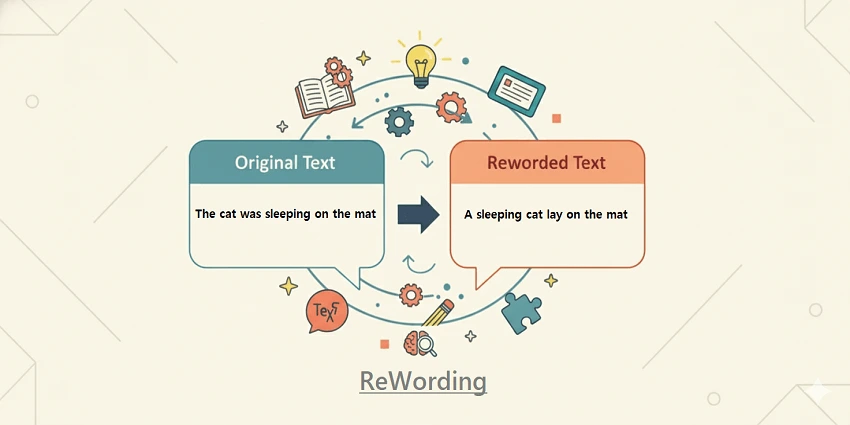
Rewording means swapping words in a sentence with other words that mean the same thing. You might change the phrasing a little, but the sentence's basic structure stays the same. Think of it as a quick fix to make a sentence clearer or less repetitive. This is the core definition and meaning of rewording.
Rewording is best for:
- Fixing a single sentence that sounds awkward.
- Replacing a word you have used too many times.
- Explaining a complex term for a general audience.
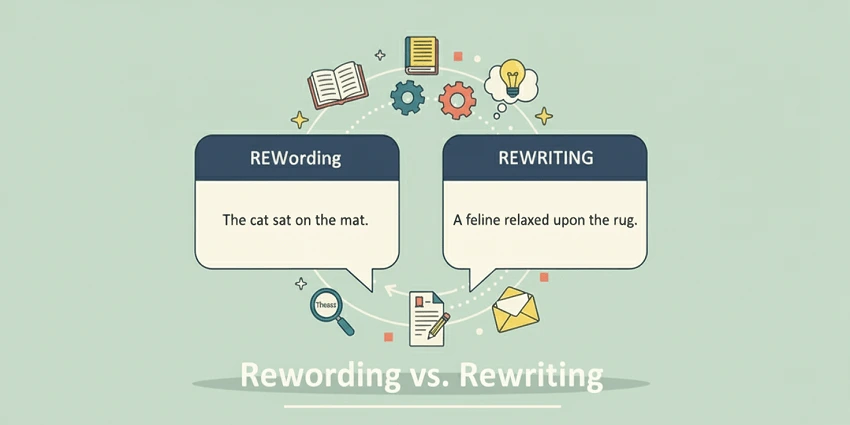
An example of rewording:
What is rewriting?
Rewriting means completely changing the structure and style of a piece of text. You take the main idea from the source and express it in a brand new way. This often involves adding your own thoughts, changing the tone, or organizing the information differently. You throw away the original sentence framework. If you need a practical workflow for doing this well, start with our guide on how to paraphrase sentences properly.
Rewriting is best for:
- Using someone else's ideas in your research paper without copying them.
- Changing a piece of content for a new audience, like making a technical report into a simple blog post.
- Improving the flow and organization of entire paragraphs.
An example of rewriting:
Key differences between rewording and rewriting
Even though both methods change text, they are not the same.
Depth of Change
Rewording is a surface-level change that focuses on vocabulary. Rewriting is a deep change that focuses on sentence structure, voice, and how the idea is presented.
Originality
Rewording keeps the text very close to the original, which can risk plagiarism if you do not cite the source. Good rewriting creates a highly original text that presents the same idea with a new perspective.
Primary Goal
The goal of rewording is to polish or simplify. The goal of rewriting is to transform, adapt, or rebuild.
When to use each technique
Use rewording for quick fixes on sentences you have written yourself. If a sentence you wrote does not sound right, rewording can help you improve it without losing your main point.
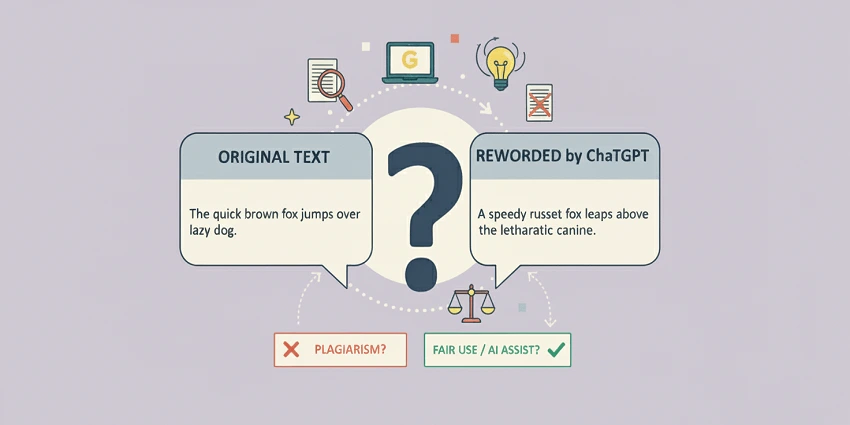
Use rewriting when you are working with someone else's writing or when you need to make big improvements to your own work. When you are using another author's idea, you must rewrite it, not just reword it, to avoid plagiarism. Rewriting is also the key to turning a first draft into a much better second draft. If you're worried about AI tools crossing that line, our article on ChatGPT rewording and plagiarism breaks that down.
Frequently Asked Questions
Write confidently in your own words
When you write, it can be easy to rely too much on how your source said something. TheReword can help. Before you turn in your work, use our AI reworder. This helps make sure your work is original and that you have given proper credit, so you can be confident you have rewritten effectively.